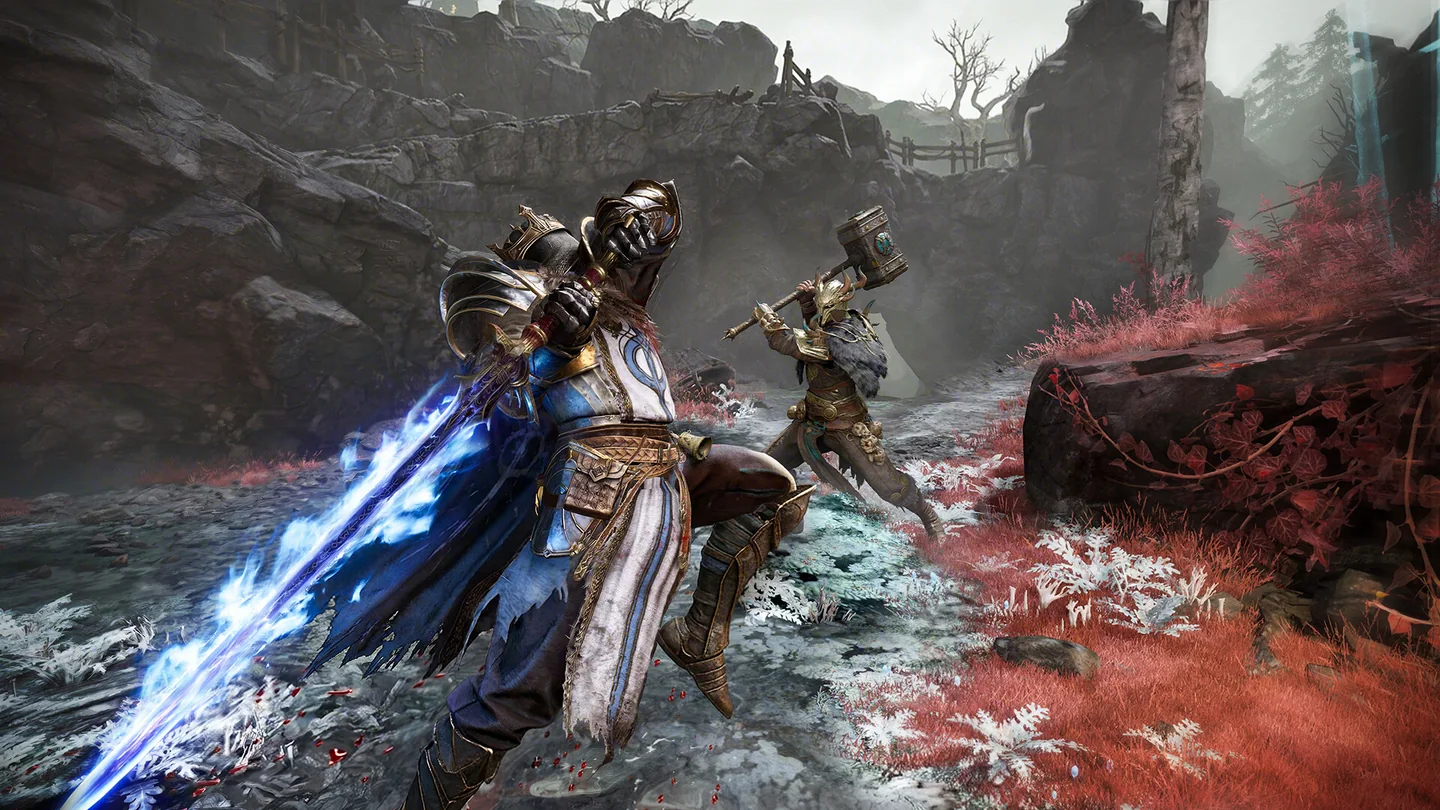
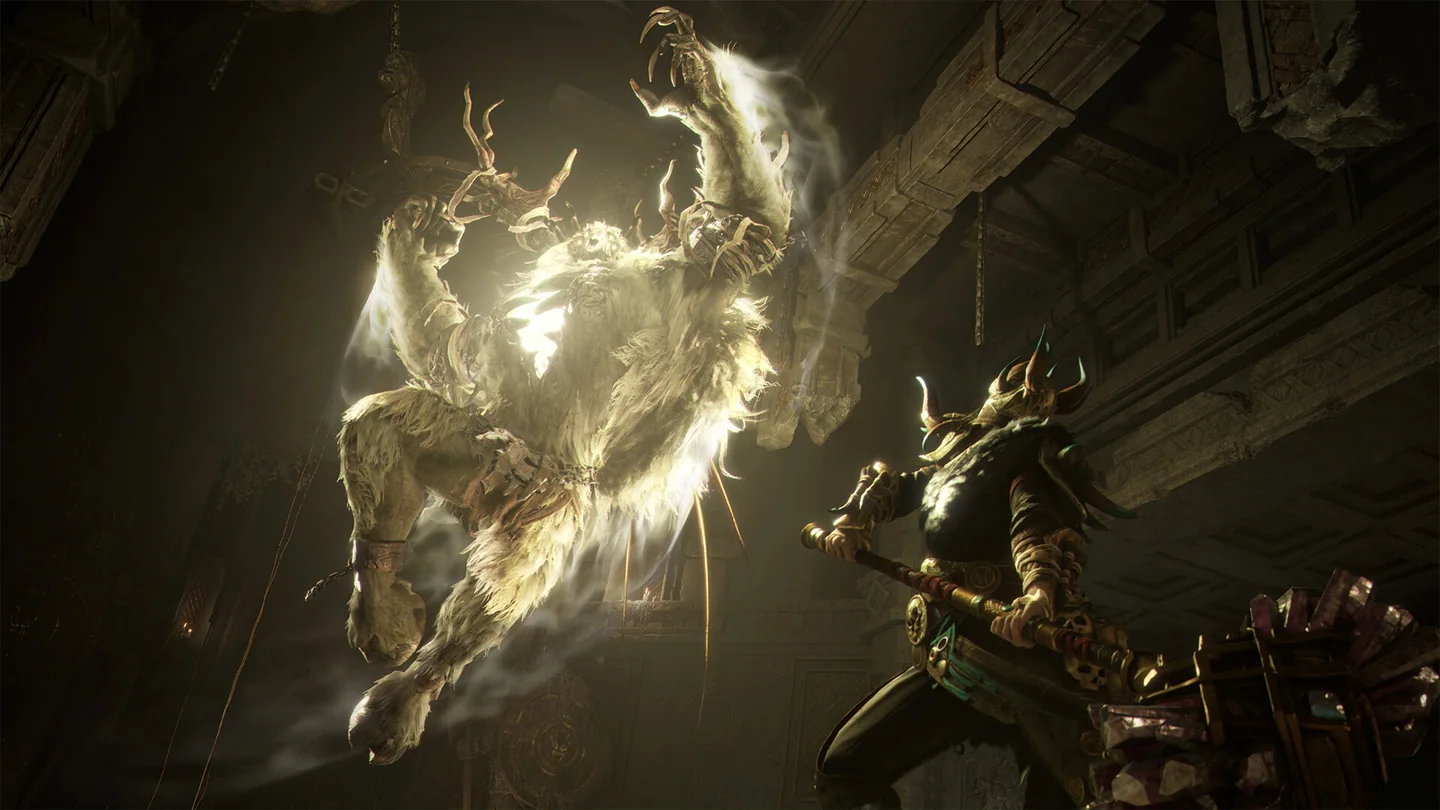
Free aim turns camera control into offense
Manual aim means the camera is part of every attack decision. Put the likely path of the strike through the target before committing. A large opponent can fill the screen while its weak point remains outside the useful arc, so visual size is not the same as target quality.
Weak points reward precision, but a difficult angle can cost more time and exposure than the bonus is worth. Choose the safer body hit when a perfect attempt would freeze movement or separate you from cover.
Against players, aim also communicates intention. Repeatedly attacking the same line makes your movement readable. Change elevation, timing or approach only when the new angle still leaves a retreat.
Practice the same attack from several camera distances. Keep both the intended contact point and the surrounding route visible enough to react when the encounter changes. Repeat until camera correction no longer delays the defensive reset.
Treat weapon stances as answers to different problems
Every class has two weapon stances according to the official store description. A stance change should solve a named problem: reach, protection, control, pressure or recovery. Switching because the option is available adds input without adding purpose.
Learn one short sequence in each stance. Test which one returns control sooner and which one creates the stronger conversion when an opponent is already vulnerable. This is more useful than memorizing the longest possible string.
Before a fight, choose a default stance for the expected range. After contact, switch only when the opponent, terrain or squad objective changes. A deliberate stance map keeps complexity from becoming panic.
When comparing stances, use the same opponent and starting distance. A stable test reveals differences in reach, commitment and recovery more clearly than unrelated fights. Record which problem made the alternate stance better. Repeat the test after a gear change to separate stance behavior from item power.
Tactical items should change geometry or certainty
A tactical item earns its slot when it creates a clearer decision. It may break sight, deny an approach, expose a threat, buy interaction time or let the squad cross dangerous space. Damage without a positional purpose can be less valuable than control that ends the exchange.
Call the item before it changes the field so allies know where to move. Two players spending separate tools on the same solved problem wastes the resources needed for extraction.
Preserve at least one answer for the final route when possible. The exact item economy can change, but the principle survives: a resource that secures extraction has delivered more value than one held through a failed run.
Assign one item to a known job before deployment. If the expected problem never appears, preserving it is better than forcing an unnecessary use merely to empty the slot. A saved tool keeps another route available.
Coordinate pressure in short windows
A three-player squad should not become three isolated duels. Choose who creates the opening, who converts it and who watches the route that could interrupt the fight. The roles can change by class and position, but the questions remain stable.
Focus calls should include location and duration. If the opening closes, reset rather than chasing the old instruction. PvPvE fights change when creatures enter the space or another squad hears the exchange.
Solo hunters can apply the same model to themselves: create an opening, take a bounded conversion, then check the route. The pause between those phases protects against tunnel vision.
After a coordinated window, each player should return to a known position. This prevents a successful collapse from becoming three exposed pursuit paths when the target escapes. Re-form before another squad arrives. Confirm the extraction direction before opening a second pressure window. Name the regroup point before anyone moves.
Disengagement is a combat outcome
Leave when the fight no longer protects value, improves position or removes an unavoidable obstacle. Long damage trades reveal location and spend the healing or control needed for the route home.
Break line of sight before relying on distance. Use terrain, doors, elevation and environmental threats to make pursuit expensive. A straight retreat through open space only changes who is attacking from behind.
After breaking contact, choose whether to rotate, heal or continue to extraction. Do not stop at the first corner and assume the old fight ended. The opponent has information about your direction, so the reset needs a second layer.
Measure disengagement by what happens next. If the squad can heal, rotate and approach extraction without immediate pursuit, the combat decision achieved its purpose. If pursuit continues, add another line-of-sight break. Do not heal until the new position hides the squad from the old firing angle.
Primary sourceOfficial Steam combat feature list ↗